
☰
Heavy-duty mechanical face seal solutions for mining, construction, and crawler equipment.

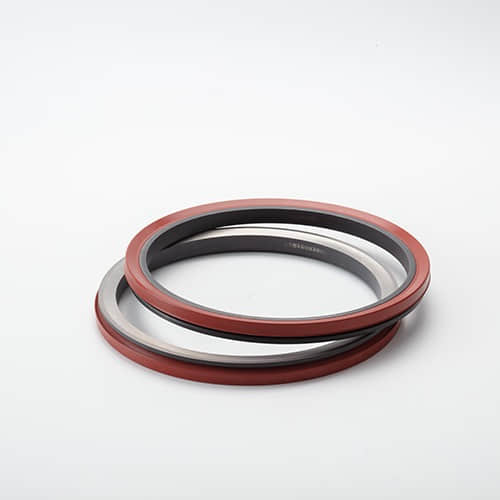
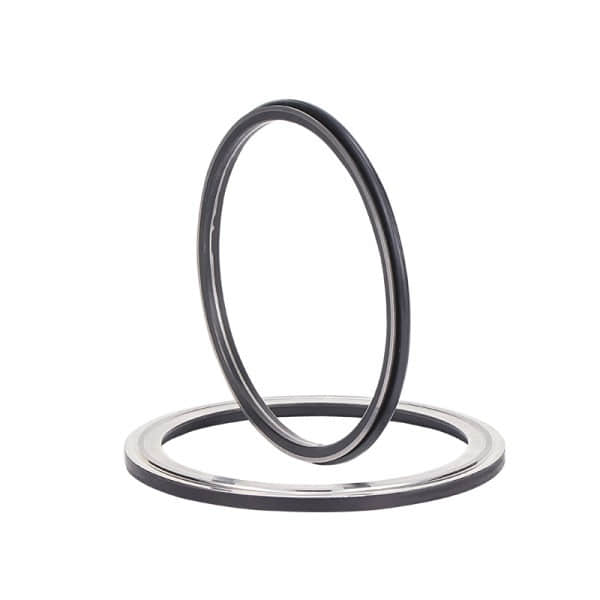
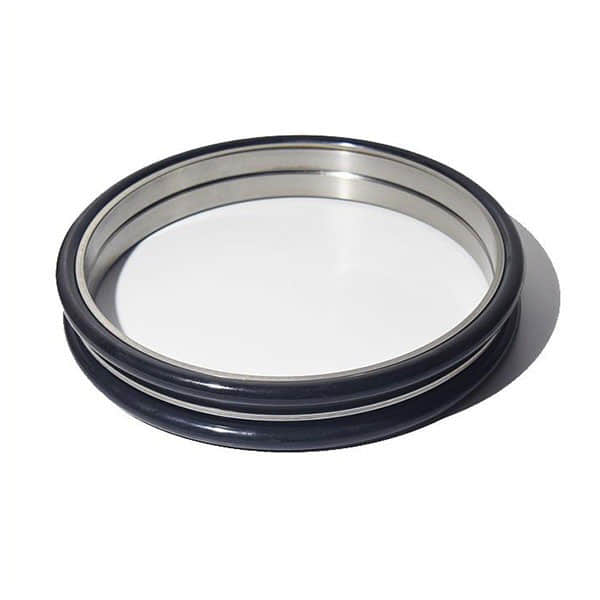
A DO floating seal is an O-ring loaded mechanical face seal: two metal rings with lapped faces, each paired with a toric elastomer ring in a seal house (floating-seat bore). The toric ring provides static sealing, axial loading and wear compensation; the metal faces do the dynamic sealing work. It is not a rubber lip seal — it is a complete system of rings, elastomers, housing geometry, lubricant and assembly discipline.
DO is the most widely used profile in the aftermarket and in Caterpillar-type undercarriage applications: final drives, track rollers, carrier rollers and idlers on excavators, bulldozers and mining crawlers. HuaTong rings are cast from 15Cr3Mo high-chrome alloy, heat-treated and twin-face lapped (target Ra ≤ 0.20 µm class) so the contact band can hold oil in and keep mud, sand and mine dust out.
| Profile | Type DO — O-ring / toric ring loaded floating seal (duo-cone / mechanical face seal) |
|---|---|
| Set composition | Two metal seal rings + two toric elastomer rings, supplied as one matched group |
| Primary function | Retain hub lubricant; block external mud, water, sand and abrasive dust from bearing/gear cavities |
| Ring material | High-chrome alloy cast iron (15Cr3Mo family); melt, cast, heat-treat, CNC and lapped faces |
| Typical install positions | Final drive, track roller, carrier roller, idler, sprocket hub on excavators, dozers and crawlers |
| Elastomer options | NBR (general mineral oil), HNBR (heat/oil), FKM (elevated temp / chemical) — per fluid and temperature |
Working logic, seal-house requirements, face-pressure balance and field assembly rules derived from HuaTong engineering training. Scroll inside the panel.
| Four-step working logic | 1) Elastomer compressed in seal house stores energy 2) Rings pushed into face contact 3) One ring rotates, faces slide 4) Wear compensated by elastomer release |
|---|---|
| Metal ring back geometry | Steps, taper or inverted-cone features on ring O.D. cooperate with O-ring to generate axial face load in the bore |
| Seal house (floating seat) | Bore angle, depth, chamfer, roughness and coaxiality control O-ring compression and face pressure — not a simple groove |
| Seal-house roughness (typical) | Loading surface often Ra 6.3–12.5 µm class so toric ring can grip and roll on ramps without uncontrolled slip |
| Face roughness Ra | Engineering target approx. 0.05–0.20 µm after lapping; confirm per drawing and size |
| Face flatness | Often controlled to approx. 0.3–1.0 µm or by light-band inspection on critical sizes |
| Ring hardness | Common HRC 58–68; high-wear 15Cr3Mo routes may reach HRC 60–72 — always state material + test position |
| Face pressure balance | Too low → leak and contamination ingress; too high → heat, burned faces and elastomer overload. Balance with compression, speed and oil viscosity |
| Hydrodynamic oil film | Thin oil film at the lapped interface reduces wear; goal is controlled contact + micro-lubrication, not dry friction or full separation |
| Contact band | Visible running band on faces after service; abnormal width, colour or scoring indicates pressure, lubrication or contamination issues |
| Suitable duty | Slow-to-medium speed, heavy load, high contamination, difficult maintenance — not for high-speed clean environments or hydraulic pressure sealing |
| DO vs. DF warning | DO must not be installed in DF seal houses (or vice versa). Similar OD can fit but face pressure and compensation become uncontrolled |
| Assembly — toric ring | No twist, cut or roll-up on housing/ring ramps; toric must grip and roll under compression to generate spring force |
| Assembly — faces | Never strike lapped faces; clean before mate; thin clean oil film only; no grit, fibres or metal chips on faces |
| Assembly — grease caution | Heavy grease on toric-to-housing contact can cause slip instead of roll, leading to early leakage |
| Rebuild rule | Replace both metal rings and both elastomers together; inspect worn seal house before fitting new group |
| RFQ checklist | OEM part no., machine model, install position, OD/ID/height, old-part photos (face + elastomer + marking), fluid, contamination type, failure mode |
Select by position + contamination + failure mode, not part number alone. DO is the default profile for crawler undercarriage positions below.
Travel motors, track rollers, carrier rollers and idlers — mud and sand ingress is the main enemy; metal face hardness and toric compensation extend rebuild intervals.
Final drives and rollers on D-series crawlers see shock, bias load and abrasive dust — DO groups are the standard aftermarket replacement profile.
Conveyors, loaders and mobile crushers operating in stone dust and slurry need carbide-rich alloy faces and stable face pressure over long shifts.
Contact HuaTong for OEM manufacturing, samples, drawing review and worldwide supply support.
Contact us