Excavator & bulldozer undercarriage
Heavy-load travel motors, track rollers and carrier positions where the OEM drawing specifies matched X/Y ring geometry under shock and abrasive mud.

Type XY · X + Y paired group
Matched X-ring + Y-ring mechanical face seal group for heavy-duty OEM positions — excavator and bulldozer undercarriage, mining conveyors, shearers and industrial reducers.
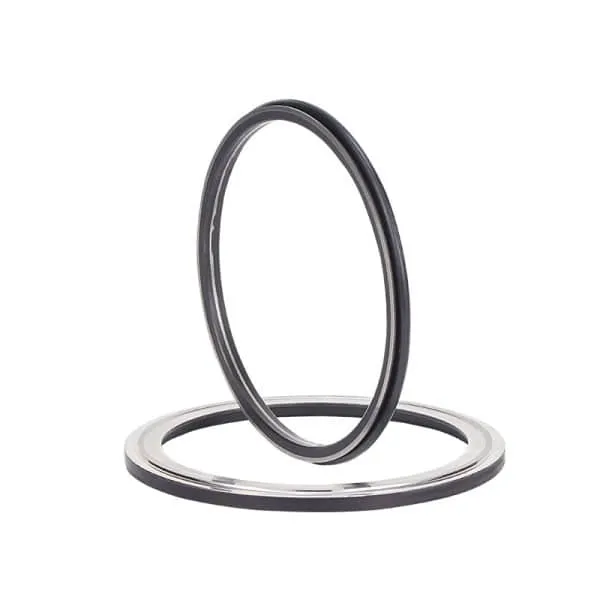
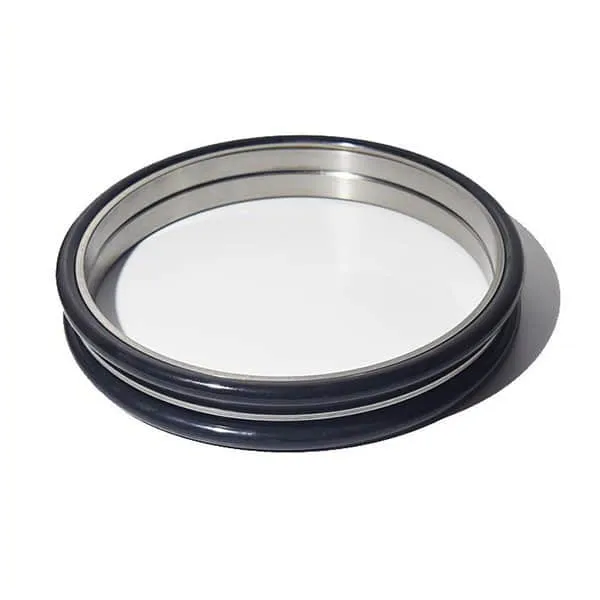
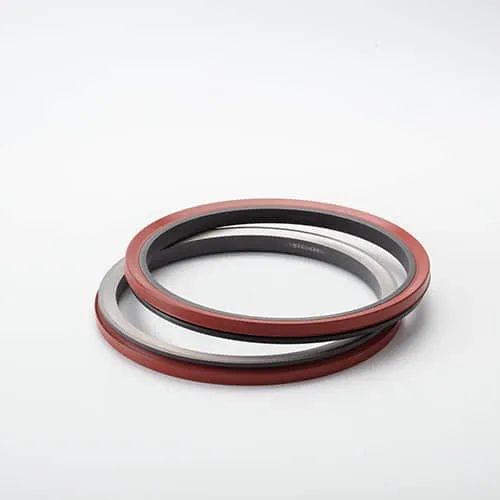
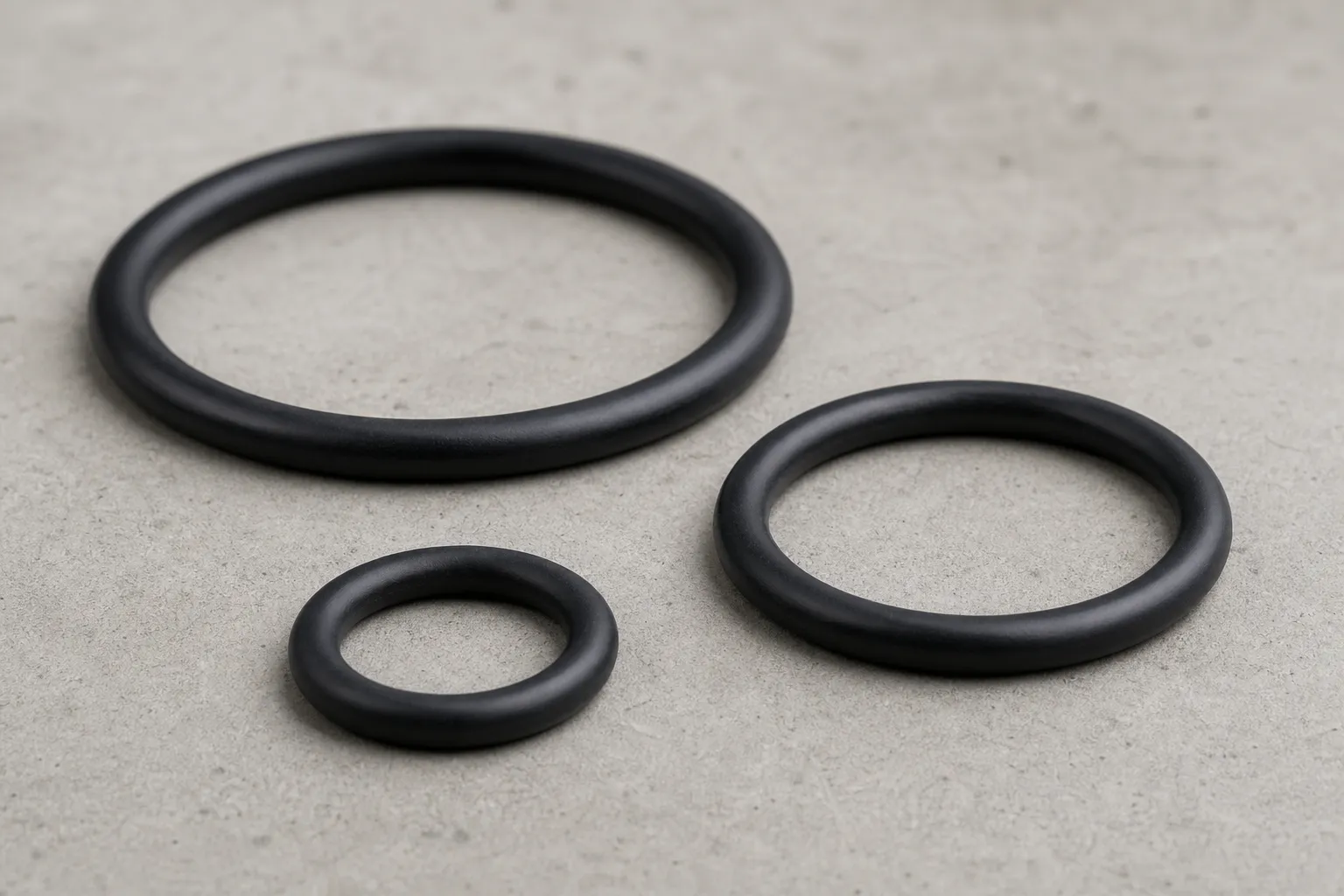
An XY floating seal is a matched X-ring + Y-ring metal seal group: one X half and one Y half with lapped faces — complementary geometry, not two identical rings — each paired with a toric O-ring loader in a seal house. The halves must stay as an OEM-matched set; the metal faces do the dynamic sealing work.
XY is specified when the OEM drawing calls for complementary X/Y ring heights in one group (catalog lines such as SC 0760 X + SC 0760 Y) — not because the elastomer differs from DO. HuaTong rings are cast from 15Cr3Mo high-chrome alloy targeting HRC 65–72 for abrasive service, heat-treated and twin-face lapped. XY is not interchangeable with DO or DF — different metal pairing and housing logic.
Use this matrix before you quote or rebuild. Similar OD can still mean the wrong face pressure if the profile is swapped.
| Factor | DO | DF | XY (this page) |
|---|---|---|---|
| Metal ring pair | Two identical symmetric rings | Two identical symmetric rings | Complementary X + Y halves (different heights) |
| Elastomer loader | Toric O-ring (one per half) | Diamond / square section (one per half) | Toric O-ring (one per half) |
| Typical OEM fit | Standard duo-cone housings (incl. Cat-type undercarriage) | Compact axial / square-bore housings | OEM matched X/Y catalog groups |
| Housing logic | O-ring rolls on ring ramps in seal house | Diamond loader seats in shallow or square pockets — do not mix with DO | X and Y halves are not mirror-identical — replace as a matched set |
| Best when | Standard crawler rebuilds, aftermarket DO marks | Limited axial depth or DF marking on worn elastomer | OEM drawing lists X/Y line (e.g. SC 0760 X + Y) |
Still unsure? Send a worn-seal photo, OEM number or housing drawing — we confirm DO / DF / XY before quoting.
Summary parameters for RFQ and engineering review. Full size charts available on request or via datasheet.
| Profile | Type XY — matched X-ring + Y-ring complementary floating seal group (mechanical face seal) |
|---|---|
| Set composition | One X metal ring + one Y metal ring + two toric O-ring loaders, supplied as one OEM-matched group |
| Primary function | Retain hub lubricant; block external mud, water, sand and abrasive dust in heavy-duty OEM positions |
| Ring material | High-chrome alloy cast iron (15Cr3Mo family); melt, cast, heat-treat, CNC and lapped faces — HRC 65–72 target on abrasive routes |
| Typical install positions | Heavy-duty final drives, track systems, mining conveyors, shearers, mixers and industrial reducers |
| Elastomer options | NBR (general mineral oil), HNBR (heat/oil), FKM (elevated temp / chemical) — per fluid, speed and temperature |
X/Y pairing logic, catalog sizing and duty limits. Scroll inside the panel.
| Four-step working logic | 1) Toric O-ring compressed in seal house stores energy · 2) Complementary X/Y metal rings pushed into face contact · 3) One ring rotates, faces slide · 4) Wear compensated by O-ring release |
|---|---|
| X/Y pairing logic | X and Y metal halves have complementary back geometry and often different axial heights — e.g. SC 0760 X at 10.5 mm vs SC 0760 Y at 22 mm on the same OD/ID line. Mixing halves from different catalog lines breaks face-pressure balance |
| Matched set requirement | Always replace X half, Y half and both toric O-ring loaders together — never fit one new half against a worn partner ring |
| Seal house (floating seat) | Bore angle, depth, chamfer, roughness and coaxiality control loader compression and face pressure for the specific X/Y pair |
| Catalog sizing (typical) | Common catalog span approx. 45–1425 mm outer diameter — confirm exact line from OEM number, drawing or worn group photo |
| Face roughness Ra | Engineering target approx. 0.05–0.20 μm after lapping; confirm per drawing and catalog line |
| Face flatness | Often controlled to approx. 0.3–1.0 μm or by light-band inspection on critical sizes |
| Ring hardness | 15Cr3Mo routes for XY often target HRC 65–72 for abrasive, heavy-load service — state material + test position on RFQ |
| Typical duty limits (reference) | Up to approx. 3 m/s circumferential speed and 0.3 MPa face-pressure class — confirm per catalog line, fluid and housing |
| Heavy load duty | Specified where the OEM drawing calls for an X/Y metal pair in heavy undercarriage or conveyor positions — confirm duty before cross-series substitution |
| XY vs DO/DF warning | XY groups must not be substituted for DO or DF (or vice versa). Similar OD can fit physically but pairing and face pressure will be wrong |
| Rebuild rule | Replace X ring, Y ring and both toric O-rings together; inspect seal house and hub for wear before fitting new group |
| RFQ checklist | X/Y markings, OEM group number, machine model, install position, OD/ID/height per half, duty (load/speed), fluid, failure mode |
Select by install position + OEM group marking. XY is a defined X/Y metal pairing on the drawing — elastomer loaders are still toric O-rings.
Heavy-load travel motors, track rollers and carrier positions where the OEM drawing specifies matched X/Y ring geometry under shock and abrasive mud.
Abrasive duty on conveyors, shearers and mobile crushers — carbide-rich alloy faces and stable face pressure over long shifts.
Matched X/Y groups on reducers, mixers and process equipment where complementary metal ring halves are specified on the OEM drawing.
Incomplete RFQs slow matching. Include any three of the items below and we reply within 24 hours on working days.
Short answers buyers ask before sampling or rebuilding.
No. X and Y are complementary metal halves in a matched group. Fitting one new half against a worn partner ring unbalances face pressure and shortens service life.
Each half carries its own marking or catalog line — often with different axial height on the same OD/ID. Photograph both rings with stamps visible, or send the OEM group number.
No. Similar outer diameter can still mean wrong pairing and face pressure. XY uses complementary X/Y metal halves with toric O-ring loaders — confirm from marking or sample before ordering.
Yes — download the XY datasheet for the summary range, or send OEM numbers / dimensions for a confirmed match and packing quote.
Photograph the ring marking or send the worn group — we match the correct XY catalog line.